Cocaine Addiction Q&A
Cocaine occupies a notorious place in the world of stimulants. Its high is famously intense and famously brief, and that sharp rush followed by a fast crash is exactly what pulls people back for more. Below, we answer the most common questions about cocaine use: the warning signs of dependence, the statistics, the risks to your heart and brain, and what actually helps when you want to stop. When you're ready, take our free Cocaine Addiction Check (Takes 1-3 minutes, confidential, with instant results)
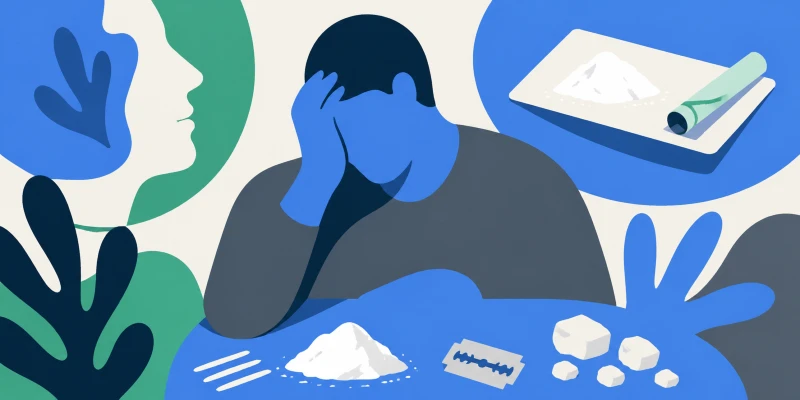
Cocaine remains a significant public health concern. Most statistics below are from the NIDA Trends and Statistics and CDC.
- Approximately 4.8 million Americans ages 12 and older reported using cocaine in the past year.
- Around 1.4 million people meet the criteria for cocaine use disorder, meaning their use has become compulsive and harmful.
- Cocaine-involved overdose deaths reached over 22,000 in 2024, a significant decline from prior years but still alarmingly high. Many of these deaths involve cocaine adulterated with fentanyl.
- Men are twice as likely as women to use cocaine, though rates among women have been increasing.
- Young adults (18-25) have the highest rates of cocaine use of any age group.
- No FDA-approved medications exist specifically for cocaine use disorder, making behavioral therapies the primary treatment approach. Contingency management and cognitive behavioral therapy have the strongest evidence for effectiveness (NIH).
In Canada, stimulant use, primarily cocaine and methamphetamine, remains a serious concern. The crude rate of apparent stimulant toxicity deaths doubled from 2018 to 2024 across the country, with cocaine frequently involved in poly-drug toxicity cases (CCSA/CCENDU, 2026). The majority of stimulant-related harms involve cardiovascular events such as heart attacks, cardiac arrhythmias, and hypertension. Contamination of the drug supply with fentanyl is also a major factor driving overdose deaths nationally (Public Health Agency of Canada, 2025).
Cocaine is one of the most addictive substances, with some studies suggesting that 15-20% of people who try it will develop dependence. The speed of this transition varies, but the risk is real regardless of how use begins.
If you're asking this question, you've likely noticed some patterns that concern you. Cocaine addiction can develop faster than many people expect, especially when using regularly or in binge patterns (Nature Communications).
Signs that point toward cocaine addiction, based on DSM-5 criteria for stimulant use disorder:
- You use more cocaine or use it more often than you intended
- You've tried to cut back or stop and couldn't
- You spend significant time obtaining, using, or recovering from cocaine
- You experience strong cravings when you're not using
- You continue using despite negative effects on your health, finances, or relationships
- You need more cocaine to get the same high (tolerance)
- You feel depressed, tired, or irritable when you stop using
- You've lied to others about your cocaine use
- You've used cocaine in risky situations (driving, at work)
If several of these ring true, you may be experiencing cocaine use disorder. Our Cocaine Use Check can give you a clearer picture.
Cocaine addiction shows up in physical, behavioral, and psychological signs. The DSM-5 criteria for stimulant use disorder include many of the same markers as other substance addictions (NIH).
Physical signs:
- Frequent nosebleeds or runny nose (for snorted cocaine)
- Weight loss and decreased appetite
- Dilated pupils and bloodshot eyes
- Racing heart, chest pain, or high blood pressure
- Sleep disturbances (insomnia followed by excessive sleep)
Behavioral signs:
- Secretive behavior and lying about whereabouts or spending
- Financial problems, borrowing money, or selling possessions
- Social withdrawal from friends and family who don't use
- Loss of interest in hobbies and activities unrelated to cocaine
- Continued use despite relationship or work problems
Psychological signs:
- Paranoia or suspiciousness, especially during or after use
- Anxiety, panic attacks, or agitation
- Depression and mood swings, particularly coming down from the drug
- Intense cravings that feel difficult to resist
- Increased irritability or aggression
Cocaine is one of the most rapidly addictive substances, and the timeline can be surprisingly short. Cocaine directly impacts the brain's dopamine system, creating an intense reward signal that the brain quickly learns to prioritize (Nature Communications).
First use: The initial experience is often intensely pleasurable. The brain releases 2-10 times more dopamine than natural rewards produce. This creates a powerful memory that the brain will seek to repeat.
Binge patterns: Cocaine is often used in binges, with repeated doses over hours or days. A single weekend binge can begin to alter dopamine receptor function. The crash after a binge reinforces the desire to use again to escape the low.
Transition to dependence: For people who use regularly (weekly or more), dependence can develop within months. For those who use in binges or smoke/crack cocaine, the timeline can be even shorter. The route of administration matters: smoking or injecting cocaine reaches the brain fastest and carries the highest addiction potential.
Kindling effect: Each cycle of use and withdrawal can make the next withdrawal worse and increase craving intensity, making it progressively harder to stop.
With cocaine, the distinction between casual use and addiction can blur quickly. The drug's pharmacology makes it inherently more addictive than many other substances, so even "occasional" use carries significant risk (Nature Communications).
Casual or experimental use:
- Using infrequently, typically in social settings
- No significant cravings between uses
- Can easily decline when offered
- No impact on responsibilities or relationships
- No escalation in frequency or quantity
Problematic use or addiction:
- Using alone or in secret
- Escalating frequency, quantity, or both
- Experiencing withdrawal crashes and using to avoid them
- Financial strain from purchasing
- Neglecting work, family, and personal responsibilities
- Failed attempts to stop or control use
Even if your use seems casual, it's worth paying attention to any escalation. Cocaine addiction often catches people by surprise because the transition can happen faster than expected.
Cocaine is a powerful stimulant that affects multiple systems in the brain and body. Understanding these effects can help clarify why cocaine is so addictive and why stopping can be challenging.
Brain effects: Cocaine blocks the reuptake of dopamine, norepinephrine, and serotonin, causing these neurotransmitters to accumulate in the spaces between neurons. The resulting dopamine flood produces intense euphoria. With repeated use, the brain adapts by reducing dopamine receptor density and dopamine production. This leads to tolerance (needing more cocaine) and dysphoria (difficulty feeling pleasure without the drug).
Cardiovascular effects: Cocaine constricts blood vessels, increases heart rate, and raises blood pressure. Even a single use can trigger heart attack, stroke, or cardiac arrhythmia in otherwise healthy people. Long-term use accelerates atherosclerosis and can cause permanent heart muscle damage (MDPI).
Respiratory effects: Smoking crack cocaine can cause lung damage, chronic cough, and respiratory infections. A condition called crack lung involves acute inflammation and fluid buildup in the lungs (Chest Journal). Snorting cocaine damages the nasal passages, potentially causing a perforated septum.
Brain blood flow: Cocaine reduces cerebral blood flow, which can persist for weeks or months after stopping (Frontiers in Pharmacology). A 2024 study found that cocaine-induced changes in cerebral blood flow may contribute to cognitive deficits and addiction progression.
The relationship between cocaine and mental health is bidirectional. Cocaine use can cause mental health problems, and pre-existing mental health conditions increase the risk of developing cocaine addiction.
Short term mental health effects:
- Anxiety and panic, especially at higher doses
- Paranoia and suspiciousness, which can become extreme with heavy use
- Agitation and irritability
- Grandiosity or inflated self confidence during use
Long term mental health effects:
- Depression, particularly during withdrawal and abstinence
- Mood instability with rapid shifts between highs and lows
- Persistent anxiety disorders
- Cocaine-induced psychosis, characterized by paranoia, hallucinations, and delusions (more common with crack cocaine)
- Cognitive impairment affecting memory, attention, and decision making
The withdrawal depression cycle: Cocaine depletes dopamine, and during withdrawal dopamine levels drop below baseline. This creates a period of depression, low energy, and anhedonia (inability to feel pleasure) that can last days to weeks (Frontiers in Psychiatry). Many people relapse during this period specifically to escape the depression.
Could be, and this is a critical safety concern. Fentanyl adulteration of cocaine has become increasingly common, driving a significant share of cocaine-involved overdose deaths. A 2024 Lancet study found that fentanyl co-occurrence in cocaine samples has risen significantly across the United States (The Lancet).
Fentanyl is a synthetic opioid 50-100 times more potent than morphine. When it's mixed into cocaine (often without the user's knowledge), even a small amount can cause respiratory arrest. Naloxone (Narcan) is a medication that can counter the effects of an opioid overdose, which is something to be aware of.
What you should know:
- Fentanyl has been found in cocaine in every form: powder, crack, and liquid
- You cannot see, smell, or taste fentanyl in cocaine
- Fentanyl test strips can detect contamination and are legal in most states
- Carrying naloxone is recommended for anyone using cocaine
This is not about judgment. It's about safety. If you or someone you know uses cocaine, having naloxone available could save a life.
Crack cocaine is the same drug as powder cocaine, just in a different form. The difference is in how it enters the body and how fast it reaches the brain. Powder cocaine is typically snorted and takes several minutes to take effect. Crack is smoked, reaching the brain in seconds. This difference in speed has major implications for addiction potential (Nature Neuropsychopharmacology).
Faster onset, more intense high: When crack is smoked, it hits the brain almost instantly, producing a powerful but short-lived rush lasting only 5-10 minutes. The high from snorted cocaine builds more slowly and lasts 15-30 minutes. The faster a drug reaches the brain, the more addictive it tends to be.
Sharper crash, stronger cravings: Because the crack high is so intense and brief, the comedown is also more abrupt. Users often feel a strong urge to use again immediately to recapture the rush or escape the crash. This pattern of repeated use within a single session is called a binge and is much more common with crack than powder cocaine.
Lower cost per hit but higher overall cost: Crack is often sold in smaller, cheaper units than powder cocaine, making it more accessible. However, the intense craving cycle can lead to frequent use that quickly becomes more expensive overall, both financially and in terms of health.
Greater lung and respiratory risks: Smoking crack exposes the lungs to direct irritation and damage. Chronic crack smoking can cause coughing, shortness of breath, chest pain, and a condition known as crack lung.
The bottom line: crack and powder are the same chemical, but the method of use makes crack significantly more addictive and harder to control. If you are using crack, you are dealing with the most addictive form of an already highly addictive drug.
Cocaine withdrawal is primarily psychological rather than physical, but it can be intense and contribute significantly to relapse. Unlike alcohol withdrawal, cocaine withdrawal is rarely medically dangerous, but the emotional symptoms can be severe. Anhedonia (inability to feel pleasure) is a core feature and has been shown to predict treatment outcomes (NIH).
Common withdrawal symptoms include:
- Depression: Low mood, feelings of hopelessness, lack of motivation
- Fatigue: Extreme tiredness and need for excessive sleep
- Intense cravings: Strong urges to use cocaine, often triggered by people, places, or emotions associated with use
- Anxiety and irritability: Feeling on edge, short-tempered, or restless
- Increased appetite: Often a sharp contrast to the appetite suppression during use
- Vivid dreams or nightmares: Some people dream about using cocaine
- Difficulty concentrating: Mental fog and trouble focusing on tasks
- Paranoia: Suspicious thoughts that gradually fade over days to weeks
Cocaine withdrawal has three phases: the crash (hours to days after last use, characterized by exhaustion, depression, and intense cravings), the withdrawal phase (1-10 weeks, with mood instability and intermittent cravings), and the extinction phase (prolonged period where cravings gradually decrease).
The cocaine withdrawal timeline follows a predictable pattern, though individual experiences vary based on duration and intensity of use:
Days 1-3 (The Crash): Immediately after stopping, many people experience intense fatigue, depression, anxiety, and strong cravings. Sleep is excessive but not restorative (NIH). This phase is the most intense emotionally.
Days 4-10 (Early Withdrawal): Cravings remain strong but become less constant. Energy begins to return. Mood may still be low. The risk of relapse remains high, especially when exposed to triggers.
Weeks 2-4 (Late Withdrawal): The worst symptoms ease. Cravings become more situational and less frequent. Sleep normalizes. Mood stabilizes. Mental clarity improves.
Weeks 4-10 (Prolonged Withdrawal): Occasional cravings can still occur, particularly in response to stress or triggers. The brain is gradually restoring normal dopamine function. This period requires continued vigilance.
Months 2-6+ (Extinction): Cravings become rare and manageable. The brain's chemistry has largely normalized. However, the neural pathways associated with cocaine use remain, and triggering situations can revive cravings even after extended abstinence.
Cocaine cravings are driven by a biological mechanism that goes far beyond willpower. Understanding the science can help you see cravings for what they are: a brain chemistry signal, not a personal failure.
The dopamine flood. Cocaine causes the brain to release 2-10 times more dopamine than natural rewards. The brain adapts by reducing its sensitivity to dopamine, so over time, normal activities stop feeling rewarding.
The dopamine deficit state. During withdrawal, dopamine levels drop below baseline. This leaves you feeling flat, depressed, and unmotivated. The craving during this state is the brain seeking relief from that chemical deficit, not a sign of weakness (NIH).
Conditioned triggers. People, places, and emotions associated with cocaine use trigger automatic craving responses through learned associations. The brain has learned: this cue equals reward. These conditioned responses are why cravings can appear suddenly in familiar environments.
Breaking the cycle. Each craving you resist weakens the neural pathway and strengthens the new one. Over time, the intensity and frequency of cravings decrease as your brain recalibrates its dopamine system. Understanding this process makes it easier to ride out the tough moments.
Cocaine withdrawal is different from withdrawal from alcohol or benzodiazepines in an important way: it is not typically life-threatening in itself. There is no risk of seizures, delirium tremens, or dangerous cardiovascular instability from stopping cocaine.
However, there are real risks that deserve attention (Frontiers in Psychiatry):
- Severe depression: The dopamine crash can trigger deep depression, and in some cases, suicidal thoughts. If you experience thoughts of self-harm, reach out for help immediately.
- Extreme fatigue: The crash phase can leave you unable to function normally, potentially affecting work, driving, and personal safety.
- Relapse risk: The intensity of cravings can lead to impulsive decisions that carry their own risks, especially if using again leads to overdose in a changed tolerance state.
- Self-medication: People in withdrawal may turn to alcohol or other substances to manage symptoms, creating additional health risks.
If you are withdrawing from cocaine and feel overwhelmed, you do not need to go through it alone. Support from a healthcare provider, counselor, or recovery group can make the process safer and more manageable.
Quitting cocaine is challenging, but millions of people have done it successfully. The most effective approaches combine behavioral strategies with strong support systems.
1. Acknowledge the challenge. Cocaine affects the brain's reward system directly. Willpower alone often isn't enough. This isn't a personal failure. It's biology. Treatment and support are the most effective path forward.
2. Seek professional treatment. Behavioral therapies are the most effective treatment for cocaine use disorder. Contingency management (providing incentives for staying drug-free) has strong evidence of effectiveness. Cognitive behavioral therapy helps identify triggers, develop coping strategies, and address underlying thought patterns. Many treatment programs offer both.
3. Remove access triggers. Delete dealers' contact information, avoid places where you used or purchased, and cut ties with using friends when possible. This is critical in early recovery when cravings are strongest. The NIDA notes that environmental cues become powerful triggers through conditioned learning.
4. Plan for the crash. The first few days after stopping will involve intense fatigue, depression, and cravings. Stock up on healthy food, arrange time off if possible, and have someone you can call for support. Don't make major decisions during this period.
5. Address the depression. Post-cocaine depression is real and can last weeks. Exercise is one of the most effective natural dopamine boosters. Regular physical activity can significantly improve mood and reduce cravings during withdrawal.
6. Build a recovery network. Isolation is the enemy of recovery. Narcotics Anonymous and SMART Recovery offer free, accessible meetings worldwide. Having people who understand what you're going through makes an enormous difference.
7. Consider residential treatment. For heavy or long-term users, inpatient treatment provides a structured environment away from triggers, with medical and therapeutic support available around the clock.
Stopping cocaine triggers a recovery process that unfolds over weeks and months. The brain's dopamine system can take months to normalize, but improvements begin within weeks of abstinence (Nature Communications). The timeline above covers the withdrawal phase, but the full picture of recovery is broader:
Physical recovery: Cardiovascular function begins to improve within days. Blood pressure and heart rate normalize over weeks. Nasal passages begin healing for those who snorted. Appetite returns, and weight stabilizes.
Brain recovery: Dopamine receptor density begins to recover within weeks, though full normalization can take 6-12 months of abstinence. Cognitive function (memory, concentration, decision making) improves gradually, with most noticeable gains in the first 3 months.
Emotional recovery: Mood stabilizes as dopamine function normalizes. Anxiety and paranoia fade. Many people report feeling more emotionally present and connected to others after the withdrawal period passes.
What people report after quitting:
- More stable mood and less anxiety
- Improved mental clarity and concentration
- Better physical health and energy
- Restored relationships and trust
- Financial recovery (cocaine is expensive)
- Freedom from the constant cycle of using, crashing, and craving
- Rediscovering genuine pleasure in everyday activities
Cocaine cravings are among the most intense of any substance, driven by the drug's powerful effect on the dopamine system. Cravings are not a sign of weakness. They are a sign that your brain is still wired for the old pattern, and that wiring is gradually weakening (Nature Communications).
Cravings have a biological basis. Cocaine triggers dopamine release 2-10 times higher than natural rewards. After regular use, the brain's dopamine receptors downregulate, making normal activities feel unrewarding. Cravings emerge when the brain seeks that dopamine surge. This is why sheer willpower often fails, the brain is literally demanding a chemical it has adapted to.
Move your body. Exercise is one of the most effective craving interventions for cocaine. Physical activity naturally boosts dopamine and endorphins, providing a healthy alternative to the drug.
Change your environment. Cravings are strongly tied to context. If you always used in a specific room or with certain people, being in that environment triggers conditioned responses. Physically leaving the situation can disrupt the craving cycle.
Call someone before you use. The single most effective immediate strategy is to contact someone who knows you're trying to quit. Just speaking the craving out loud often reduces its power. Recovery hotlines, sponsors, and support groups exist for exactly this reason.
Remember the cycle. Using cocaine to escape a craving provides temporary relief but guarantees worse cravings tomorrow. Breaking the cycle requires getting through a few days of intense discomfort. Each craving resisted weakens the neural pathway.