Pornography Addiction Q&A
Watching pornography is common, but for some people it becomes compulsive and starts to interfere with daily life, relationships, and mental health. Below, we answer the most common questions about pornography addiction: the warning signs, the statistics, how it affects your brain, relationships, and wellbeing, and what actually helps when you want to regain control. When you're ready, take our free Pornography Addiction Check (Takes 1-3 minutes, confidential, with instant results)
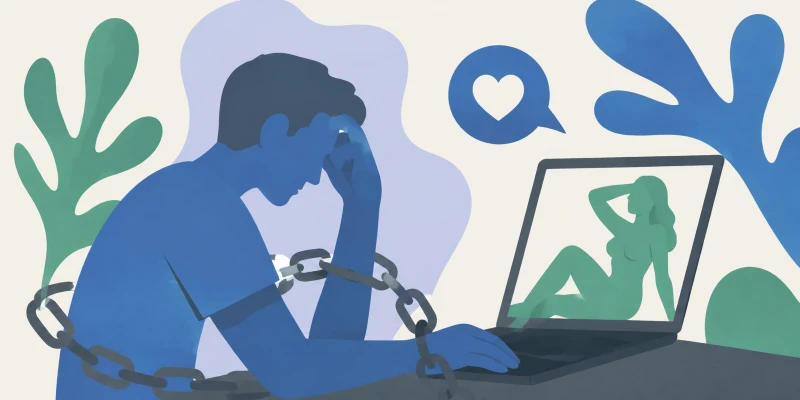
Pornography use has become nearly universal in the internet age, but the rates of problematic use tell a more specific story. Most statistics below are from the Addiction Help Pornography Survey and FHE Health.
- 3-8% of adults report clinically significant levels of problematic pornography use that causes distress or impairment.
- Up to 17% of men and 5% of women self-identify as addicted to pornography (FHE Health).
- Men are significantly more likely to report problems with pornography use, but rates among women are rising as access increases.
- Age of first exposure continues to drop, with many children first encountering pornography between ages 11-14.
- 65-75% of young adults (ages 18-30) report viewing pornography at least monthly, with a significant subset reporting difficulty controlling their use.
- Compulsive sexual behavior disorder was officially added to the World Health Organization's ICD-11 in 2019, recognizing that problematic sexual behaviors including compulsive pornography use are legitimate health concerns.
These numbers likely underrepresent the true scope, as shame and stigma prevent many people from reporting honestly. The key point: if pornography use feels problematic to you, your experience is real and valid regardless of statistics.
This is a deeply personal question, and the answer depends less on how much you watch and more on why you watch and what happens when you try to stop.
Signs that pornography use may be problematic:
- You watch more than you intend to, or for longer periods than planned
- You've tried to cut back or quit multiple times and couldn't
- You hide your viewing habits from partners or family
- Your pornography use has escalated to more extreme or novel content over time
- You feel shame, guilt, or distress about your viewing but continue anyway
- Your sexual intimacy with a partner has been negatively affected
- You view pornography at work, in public, or in other risky situations
- You feel irritable, anxious, or restless when you can't access pornography
The ICD-11 criteria for compulsive sexual behavior disorder include a persistent pattern of failure to control intense sexual impulses, repetitive sexual behavior that becomes a central focus of life, and continued behavior despite adverse consequences. If several of the above signs apply to you, our check can offer further perspective.
Pornography addiction shows up in behavioral, emotional, and relationship patterns. Unlike substance addictions, there are no physical withdrawal symptoms to measure, but the behavioral indicators are well documented in clinical research (PMC).
Behavioral signs:
- Spending increasing amounts of time viewing pornography
- Needing more explicit or novel content to achieve the same level of arousal (tolerance)
- Failed attempts to stop or reduce viewing
- Viewing in inappropriate settings (work, public restrooms, etc.)
- Lying about the amount or frequency of use
Emotional signs:
- Feelings of shame, guilt, or disgust after viewing
- Using pornography to cope with stress, boredom, loneliness, or anxiety
- Cravings or urges that feel difficult to resist
- Irritability or mood swings when unable to view
Relationship signs:
- Loss of interest in real-life sexual intimacy
- Difficulty reaching orgasm with a partner (often called porn-induced sexual dysfunction)
- Secrecy and dishonesty about viewing habits
- Withdrawal from social activities to view pornography instead
This is a debated topic in the mental health field, but the evidence increasingly supports that compulsive pornography use can function like an addiction for some people. While it is not currently a standalone diagnosis in the DSM-5, the World Health Organization added compulsive sexual behavior disorder to the ICD-11 in 2019, recognizing it as a legitimate impulse control disorder.
Neuroscience research has found that pornography consumption can produce brain changes similar to those seen in substance addictions. Studies using functional MRI have shown that frequent pornography viewers develop stronger brain responses to pornographic cues and weaker responses to other rewards, a pattern consistent with the incentive sensitization theory of addiction (JAMA Psychiatry).
A 2025 neuroimaging study found hyperactive and inhibited brain areas in response to pornography video addiction, strengthening the understanding of its neurobiological basis (Frontiers in Human Neuroscience).
Whether you call it an addiction, a compulsion, or a problematic habit, if pornography use is causing distress in your life and you can't stop on your own, it deserves attention and support.
The difference comes down to control and consequences. Many people view pornography occasionally without any negative impact on their lives. For them, it's a casual activity with no more significance than watching any other content.
Casual use often looks like:
- Occasional viewing, easily put aside when needed
- No impact on sexual relationships or intimacy
- No escalation to more extreme content
- No feelings of shame, secrecy, or loss of control
- Can take or leave it without discomfort
Problematic use often looks like:
- Feeling compelled to view, even when you don't want to
- Escalation to content that may conflict with your values
- Negative effects on sexual function with partners
- Lying, hiding, or making excuses about viewing
- Unsuccessful attempts to stop or cut back
Casual use doesn't need fixing. Problematic use deserves honest attention. Our Pornography Addiction Check can help you tell the difference.
The brain's response to pornography involves the same reward pathways activated by substances like alcohol, nicotine, and cocaine. When you view pornography, the brain releases dopamine, the neurotransmitter associated with pleasure, motivation, and reward.
Tolerance and habituation: With repeated exposure, the brain adapts by reducing its sensitivity to dopamine. This means you need more stimulation, novelty, or intensity to achieve the same level of arousal. It's the same neuroadaptive process seen in substance addictions (Behavioral Sciences).
Reward system changes: A landmark study in JAMA Psychiatry found that higher pornography consumption was associated with less brain activity during exposure to sexual stimuli, suggesting the brain had become desensitized. The same study found changes in brain structure and connectivity in frequent viewers.
Cue reactivity: Frequent viewers develop strong conditioned responses to cues associated with pornography. Seeing a notification, opening a familiar website, or even feeling certain emotions can trigger intense cravings, similar to how environmental cues trigger cravings in substance addictions.
The good news: neuroplasticity works both ways. These brain changes are reversible with sustained abstinence. Many people report significant improvements in focus, mood, and sexual function after reducing or stopping pornography use.
Yes, and this is one of the most commonly reported reasons people seek help for pornography use. The term "porn-induced sexual dysfunction" describes a cluster of issues that have become increasingly common among young men in particular.
Erectile dysfunction: Rates of erectile dysfunction in men under 40 have risen significantly, and many clinicians attribute this to high-speed internet pornography. The brain becomes conditioned to the novelty and intensity of pornographic content, making real-life sexual encounters seem less stimulating by comparison.
Delayed ejaculation: Some men find they can only reach orgasm with the specific stimulation patterns they've developed through pornography use. This can cause significant relationship stress and frustration for both partners.
Reduced libido with partners: Frequent pornography use can reduce desire for real-life sexual intimacy. This is often misinterpreted as a relationship problem when the root cause is neurological habituation.
The encouraging news: these effects are typically reversible. Many people report significant improvement in sexual function within weeks to months of stopping pornography use, as the brain resensitizes to normal stimulation.
The relationship between pornography use and mental health is complex and bidirectional. A systematic review found that problematic pornography use is associated with higher rates of anxiety, depression, and psychological distress (Taylor & Francis).
Shame and guilt: Many people who view pornography regularly experience a cycle of shame. The shame itself can drive more use, creating a self-reinforcing loop. This is especially common when viewing habits conflict with personal values or beliefs.
Coping mechanism: Many people turn to pornography as a way to manage stress, anxiety, loneliness, or boredom. While it provides temporary relief, it doesn't address the underlying issues and can become a primary coping strategy that replaces healthier alternatives.
Self image and body image: Pornography often presents unrealistic standards of sexual performance, body type, and desirability. Regular consumers may internalize these standards and feel inadequate in comparison.
Social isolation: Heavy pornography use can lead to withdrawal from social activities, relationships, and real-world connections. The viewing itself becomes a solitary activity that replaces genuine human interaction.
When regular pornography users stop, many experience a distinct withdrawal period as the brain readjusts to lower levels of stimulation. These symptoms are not physically dangerous, but they can be intense and uncomfortable (Addiction Help).
Common withdrawal symptoms include:
- Intense cravings: Strong urges to view pornography, often triggered by boredom, stress, or free time
- Irritability and mood swings: Feeling on edge, short-tempered, or emotionally volatile
- Insomnia or sleep disruption: Difficulty falling asleep, especially for those who used pornography before bed
- Depression or low mood: Feeling flat, unmotivated, or sad in the first days and weeks
- Brain fog: Difficulty concentrating or feeling mentally sluggish
- Temporary loss of libido: A "flatline" period where sexual desire drops significantly, sometimes lasting weeks
The flatline period is particularly important to understand. Many people mistake this drop in libido for a sign that something is wrong, when it's actually a normal part of the brain recalibrating its dopamine sensitivity. It typically resolves within 2-6 weeks.
The withdrawal timeline varies significantly depending on how long and heavily you've been viewing, but a general pattern has been reported by many people in recovery:
Days 1-3: The hardest period. Cravings are strongest, especially during times you typically viewed. Irritability and mood swings are common. Many people relapse during this window.
Days 4-7: Cravings begin to space out but can still be intense when triggered. The flatline period may begin, with a noticeable drop in sexual desire. This can feel alarming but is normal.
Weeks 2-4: Withdrawal symptoms gradually ease. Cravings become less frequent and less intense. Sleep often improves. Mental clarity begins to return. The flatline may persist.
Weeks 4-8: Most withdrawal symptoms resolve for the majority of people. Libido typically returns to baseline or higher. Cravings become situational and manageable.
Months 2-3+: The brain has largely recalibrated. Many people report improved focus, more stable moods, better sexual function, and a renewed interest in real-life intimacy and relationships.
The withdrawal period is temporary and passes faster than it feels like it will. Each day without pornography is a day your brain is healing.
Quitting pornography involves breaking both the neurological habit pattern and the behavioral routines. Here's a practical approach:
1. Understand what you're dealing with. This isn't a moral failing. Your brain has built strong neural pathways through repeated exposure. Quitting is a relearning process, and it takes time.
2. Remove access and triggers. Install content blockers (Covenant Eyes, BlockSite, Freedom), delete apps and bookmarks, and put your devices in common areas of your home. Make viewing require deliberate effort.
3. Identify your high-risk times. Most people have specific times when the urge is strongest: late at night, when bored, when stressed, or when alone. Plan alternative activities for those windows.
4. Replace the habit, don't just remove it. The brain needs a replacement. Exercise, cold showers, creative hobbies, meditation, and social activities all provide dopamine through healthy channels.
5. Get accountability. This is one of the most effective strategies. Tell someone you trust, join an online recovery community (r/pornfree, NoFap, Fortify), or work with a therapist who specializes in compulsive sexual behaviors. Cognitive behavioral therapy has shown effectiveness for problematic pornography use (Oxford Academic).
6. Plan for the flatline. When your libido temporarily disappears, don't panic. This is your brain healing. Use this period to focus on other areas of your life without the distraction of sexual urges.
7. Be patient with setbacks. Relapse is common and doesn't erase your progress. Each attempt builds insight and resilience. The goal is progress, not perfection.
Start by taking our Pornography Check to understand where you stand.
Stopping pornography use triggers a series of changes as your brain recalibrates. The timeline follows a familiar pattern for many people:
Week 1: Withdrawal symptoms peak. Cravings are frequent and intense. Mood may be unstable. This is the hardest phase.
Weeks 2-3: Cravings begin to decrease in frequency. The flatline may set in. Mental clarity starts improving. Sleep often gets better.
Weeks 4-6: Most withdrawal symptoms have resolved. Libido often returns. Many people report feeling more present, focused, and emotionally stable.
Months 2-3: The brain has largely resensitized. Sexual function with partners typically improves. Old triggers lose their power. Real-life intimacy becomes more satisfying.
What people report after quitting:
- Improved sexual function and satisfaction with partners
- More stable mood and less anxiety
- Clearer thinking and better concentration
- More free time and energy
- Reduced shame and improved self esteem
- Stronger real-life relationships and social connections
- Greater presence and engagement in daily life
Cravings are a normal part of breaking any habit. They don't mean you're failing. They mean your brain is still wired to expect the old reward, and that wiring is gradually weakening.
Surf the urge: Cravings typically peak and then fade within 15-30 minutes if you don't act on them. Instead of fighting the craving, notice it. Observe where you feel it in your body and watch it pass. This is called urge surfing and is a core skill in acceptance-based treatments.
Change your state: The fastest way to interrupt a craving is to change your physical state. Stand up, leave the room, splash cold water on your face, do 20 jumping jacks, or step outside. The craving was connected to your current environment and body position. Changing both disrupts it.
Know your trigger cycle: Most pornography cravings follow a predictable pattern: trigger (boredom, stress, alone time) → urge → ritual (opening browser, finding content) → behavior. Interrupt it at the urge stage by having a pre-planned alternative ready.
Use the 90-Second Urge Reset: This self-help technique helps you sit with an urge without acting on it. A quick side note worth trying when cravings feel overwhelming.
Stack easy wins: The first week is the hardest. Stack small victories: keep your phone out of the bedroom, use an accountability app, go to bed at a consistent time, exercise daily. Each small win builds momentum and confidence.