Opioids Addiction Q&A
Opioid addiction rarely starts the way people imagine. It can begin with a legitimate prescription for pain, or with a single experiment, and it escalates faster than most people expect. And because the illegal supply is increasingly contaminated with fentanyl, even a single use now carries a risk that simply did not exist a generation ago. Below, we answer the most common questions about opioid use: the warning signs of dependence, the statistics, the risks of overdose, and what actually helps when you want to stop. When you're ready, take our free Opioids Addiction Check (Takes 1-3 minutes, confidential, with instant results)
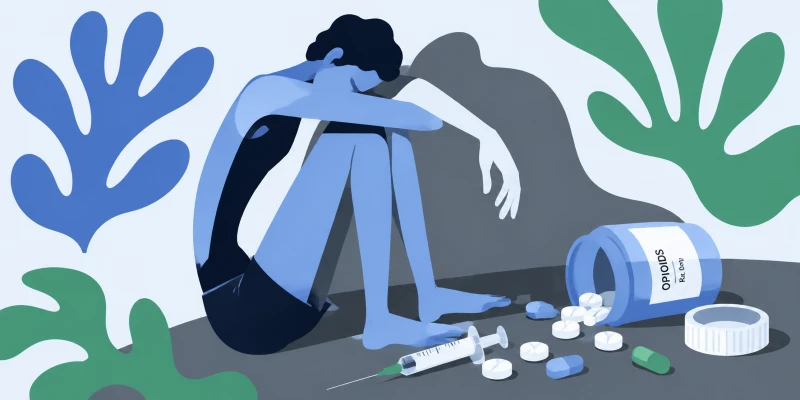
Opioid misuse is one of the most widespread public health issues in modern history. The numbers are sobering, but they also show that millions of people are on the path to recovery. Most figures below come from the NIDA Trends and Statistics and CDC.
- Nearly 6 million people in the US ages 12 and older have an opioid use disorder involving prescription painkillers.
- Over 1 million people have a heroin use disorder, many of whom started with prescription opioids.
- Opioid-involved overdose deaths exceeded 80,000 in recent years, driven primarily by synthetic opioids like illegally manufactured fentanyl.
- Fentanyl is involved in roughly two-thirds of all opioid overdose deaths, often mixed into other drugs without the user's knowledge.
- Prescription opioid misuse affects about 10 million people annually who use pain relievers without a prescription.
- Naloxone distribution has expanded massively, with over 50 million doses distributed through public health programs (CDC).
- Medication-assisted treatment with buprenorphine, methadone, or naltrexone is the gold standard, but treatment access remains uneven (SAMHSA).
In Canada, the toxic drug crisis has been devastating. More than 55,000 apparent opioid toxicity deaths were reported between 2016 and mid-2025 (Public Health Agency of Canada, 2025). While overdose deaths declined 17% in 2024, over 7,100 people still died that year, an average of 20 per day. Fentanyl and fentanyl analogues were involved in the majority of deaths (58% in 2025), and 81% involved non-pharmaceutical opioids from the toxic illicit drug supply. Naloxone distribution and supervised consumption sites have been key public health responses, and medication-assisted treatment with buprenorphine or methadone is available across all provinces (Health Canada).
Despite the scale of the problem, treatment works and millions of people recover every year. The situation is serious but not hopeless.
If you're asking this question, there's already a part of you that suspects something may not be right. That awareness is valuable. Opioid dependence can develop whether you started recreationally or through medical treatment for pain.
Signs that point toward opioid use disorder, based on DSM-5 criteria:
- You take more than you intended or for longer than planned
- You've tried to cut back or stop and couldn't
- You spend a lot of time getting, using, or recovering from opioids
- You get strong cravings when you're not using
- You keep using despite problems with health, work, or relationships
- You need higher doses for the same effect (tolerance)
- You get withdrawal symptoms when you stop (nausea, muscle aches, anxiety, insomnia)
- You take opioids to avoid withdrawal rather than for pain or pleasure
- You've given up activities you used to enjoy
- You've used opioids in dangerous situations
If several of these sound familiar, you may be experiencing opioid use disorder. Our Opioids Use Check can give you a clearer picture.
This is one of the most common questions people have about opioids, and the honest answer is: faster than most people expect. The timeline depends on which opioid, how much, how often, and your individual biology.
Prescription use. Studies show that physical dependence can develop within 4-8 weeks of daily prescribed use. Physical dependence means your body has adapted to the drug and will experience withdrawal if you stop. This can progress to addiction if use continues or escalates. The CDC now recommends the lowest effective dose for the shortest duration.
Recreational use. Tolerance to the euphoric effects builds quickly. Many users report needing to increase their dose within days or weeks to get the same feeling. This escalation can lead to dependence surprisingly fast.
Heroin and fentanyl. Heroin can produce addiction after just a few uses for some people. Fentanyl's extreme potency means tolerance builds in days, not weeks. The faster a drug hits the brain, the higher the addiction potential.
Bottom line. There is no "safe duration" of regular opioid use. If you're taking opioids, watch closely for tolerance or withdrawal symptoms. Those are your body telling you it's adapting in ways that can lead to dependence.
Yes, absolutely. This is one of the biggest misconceptions about opioids. Taking prescription opioids exactly as prescribed does not eliminate addiction risk. The opioid crisis itself was largely fueled by prescribed medications that people took as directed.
Physical dependence is expected after taking opioids for more than a few days. This is not the same as addiction, but it is a step in that direction. When your body becomes physically dependent, you will experience withdrawal if you stop suddenly. The CDC explains that opioid use disorder involves unsuccessful attempts to cut down or control use, or use that causes social problems.
The difference between dependence and addiction:
- Physical dependence means your body has adapted. You'll get withdrawal if you stop. This happens to most people who take opioids for more than a week or two.
- Addiction (OUD) means you're struggling to control your use, you continue despite problems, and your life is being negatively affected.
Dependence can happen even with careful medical use. The key is to work with your doctor on a plan for tapering off when you no longer need the medication, rather than stopping suddenly or continuing longer than necessary.
Chemically, many prescription and illegal opioids are nearly identical. Oxycodone, hydrocodone, morphine, and heroin all activate the same mu-opioid receptors in the brain. The difference is mainly in regulation, dosing, and purity, not in how they affect your body.
Prescription opioids, like oxycodone (OxyContin, Percocet), hydrocodone (Vicodin), morphine, codeine, and fentanyl patches, can be effective for pain when used briefly under medical supervision. But the CDC notes that overprescribing helped fuel the current epidemic. Even a legitimate prescription carries risk.
Illegal opioids, like heroin and non-pharmaceutical fentanyl, carry the additional danger of dose uncertainty. You never know exactly what you're getting or how strong it is. Fentanyl contamination of heroin and counterfeit pills has become the norm, not the exception. According to the CDC, over 70% of overdose deaths now involve synthetic opioids.
Whether prescription or illegal, all opioids carry addiction risk and overdose risk. The chemical effect on your brain is the same, and dependence can develop from either source.
Opioids work by binding to receptors in the brain and body that control pain, pleasure, and breathing. Understanding these effects helps explain why they're both effective pain relievers and highly addictive.
Brain effects. Opioids attach to mu-opioid receptors and release a flood of dopamine. This produces pain relief, relaxation, and euphoria. With repeated use, your brain reduces its own endorphin production and becomes less sensitive to the drug. This is tolerance. Over time you need more just to feel normal, and natural pleasures like food or music start feeling flat.
Breathing. Opioids suppress the brainstem's drive to breathe. At high doses, breathing can slow or stop entirely, which is the main cause of opioid overdose deaths. The risk increases dramatically when combined with alcohol or benzodiazepines (NIDA).
Digestion. Opioids slow the entire digestive system, causing severe constipation. This can become chronic and sometimes requires medical treatment.
Hormones. Long-term use suppresses testosterone in men and disrupts menstrual cycles in women, leading to reduced libido and mood changes.
Most of these effects begin to reverse once you stop. The brain's natural opioid system can recover, though full normalization takes months.
Yes, and the relationship works both ways. Opioids can trigger or worsen mental health conditions, and existing mental health issues increase the risk of developing opioid use disorder.
Short term effects during use:
- Euphoria and relaxation, followed by low mood as the drug wears off
- Mood swings between the high of using and the low of withdrawal
- Anxiety and agitation when you can't get more
- Emotional numbness, or a reduced ability to feel both positive and negative emotions
Long term effects:
- Depression that can become severe and persistent
- Increased anxiety or panic symptoms
- Irritability and emotional instability
- Cognitive problems with memory, focus, and decision making
- Higher risk of suicidal thoughts, especially during withdrawal
The self-medication trap. Many people with untreated depression, anxiety, or trauma turn to opioids to cope. They provide temporary relief from emotional pain but eventually make the underlying condition worse while creating an additional problem. NIDA emphasizes that treating both the mental health condition and opioid use together gives the best outcomes.
Fentanyl is the primary driver of the current overdose crisis, and for good reason. It is a synthetic opioid 50-100 times more potent than morphine and up to 50 times more potent than heroin (CDC).
Extreme potency. A lethal dose of fentanyl can be as small as 2-3 milligrams for someone without tolerance. That's about the size of a few grains of salt. Illegal fentanyl has no quality control, so strength varies wildly between batches.
Hidden contamination. Fentanyl is frequently mixed into other drugs without the user's knowledge, including heroin, cocaine, methamphetamine, and counterfeit prescription pills. You cannot see, smell, or taste it. Fentanyl test strips are a simple way to detect contamination and are legal in most states.
Rapid overdose. Fentanyl causes respiratory depression within minutes. An overdose can happen before you realize you've taken too much. Naloxone can reverse fentanyl overdoses, but may require multiple doses because fentanyl is so potent.
What this means. If you use any street drug, you face potential fentanyl exposure. Carrying naloxone and using fentanyl test strips are simple, life-saving precautions.
Knowing how to spot and respond to an overdose can literally save a life. The CDC provides clear, practical guidance.
Signs of opioid overdose:
- Unconsciousness and can't be woken up
- Slow, shallow, or stopped breathing
- Blue or gray lips and fingertips
- Pinpoint pupils that don't react to light
- Choking or gurgling sounds
- Cold, clammy skin
What to do:
- Call 911 immediately. Tell them it's an overdose. Good Samaritan laws protect both the caller and the person overdosing in most states.
- Give naloxone (Narcan) if you have it. Nasal spray or injection, works within 2-5 minutes.
- Do rescue breathing if they're not breathing. Tilt the head back, lift the chin, one breath every 5 seconds.
- Stay with them. Naloxone wears off after 30-90 minutes. Overdose can return.
- Give another dose if they don't respond within 2-3 minutes. Fentanyl may need multiple doses.
Naloxone is available over the counter at most pharmacies. Having it on hand is like having a fire extinguisher. It's a safety tool, not an endorsement of use.
Opioid withdrawal is not typically life-threatening, but it is intensely uncomfortable. It's one of the main reasons people keep using even when they desperately want to stop. Knowing what to expect can help you prepare if you're considering quitting.
Early withdrawal (6-12 hours after last use for short-acting opioids like heroin or oxycodone):
- Anxiety and restlessness, like you're crawling out of your skin
- Muscle aches and joint pain
- Yawning, teary eyes, runny nose
- Sweating and chills
- Cannot sleep
Peak withdrawal (days 2-4):
- Intense cravings. This is when most people relapse
- Stomach cramps, diarrhea, nausea, vomiting
- Goosebumps and cold flashes (where "cold turkey" comes from)
- High blood pressure and racing heart
- Severe anxiety, irritability, depression
- Complete lack of energy
Residual symptoms (days 5-10+):
- Low energy and fatigue
- Mood swings
- Sleep problems
- Cravings that come and go for weeks
While withdrawal rarely causes death, it can be severe enough to require medical supervision. Medically supervised detox using buprenorphine or methadone makes withdrawal much more manageable and significantly reduces the risk of relapse.
The timeline depends heavily on which opioid you're using. Different opioids have different half-lives, which determines when withdrawal starts and how long it drags on.
Short-acting opioids (heroin, oxycodone, hydrocodone, morphine):
- Starts: 6-12 hours after last use
- Worst: days 1-3
- Most acute symptoms gone: 5-7 days
Long-acting opioids (methadone, buprenorphine, extended-release formulas):
- Starts: 24-48 hours after last use
- Worst: days 3-5
- Acute symptoms: can last 7-14 days or longer
Post-acute withdrawal (PAWS):
- Low mood, anxiety, sleep problems, and cravings can continue for weeks or months
- This is normal and does not mean you're not recovering
- Ongoing support and healthy habits help during this phase
Important safety note: After a few days without opioids, your tolerance drops. If you relapse and take your old dose, the risk of overdose is very high. This is why medically supervised withdrawal is recommended whenever possible (SAMHSA).
Medication-assisted treatment (MAT) is the gold standard for opioid use disorder. It uses medications to normalize brain chemistry, block the euphoric effects of opioids, and reduce cravings. The SAMHSA recognizes MAT as the most effective treatment approach, especially when combined with counseling.
Buprenorphine (Suboxone, Subutex):
- A partial opioid agonist. It activates opioid receptors but with a ceiling effect (safer than full agonists)
- Reduces cravings and withdrawal without producing a strong high
- Available from certified doctors, including via telehealth
- Can be prescribed for at-home use
- Must be in moderate withdrawal before starting (otherwise it can trigger precipitated withdrawal)
Methadone:
- A full opioid agonist, taken daily under supervision at specialized clinics
- Highly effective for heavy long-term use
- Requires daily clinic visits initially, with options for take-home doses over time
- More restrictive access than buprenorphine
Naltrexone (Vivitrol):
- An opioid antagonist. It blocks opioids from working entirely
- Available as a monthly injection
- Requires full detox before starting (no opioids in your system)
- Best for people who have already detoxed and want to prevent relapse
Each option has different advantages, and the right choice depends on your situation, how heavy your use is, and what's available in your area. A healthcare provider can help you decide.
Opioid cravings can be overwhelming, but they are manageable. Cravings are driven by brain chemistry, not willpower, and they respond to specific strategies.
MAT is the most effective approach. Buprenorphine and methadone reduce cravings at the chemical level, making them much weaker and easier to resist. This is why MAT is recommended over trying to quit with willpower alone.
Practical strategies that help:
- Ride the wave. Cravings typically build, peak, and fade within 15-30 minutes. Knowing this makes it easier to wait them out.
- Change your environment. If cravings hit in a specific place or situation, physically leaving breaks the conditioned response.
- Call someone. Talking to a sponsor, friend, or helpline reduces craving intensity. Recovery hotlines are available 24/7.
- Use the 90-Second Urge Reset. This quick breathing exercise calms your nervous system and reduces the urgency of cravings. Try the 90-Second Urge Reset Technique here.
- Move. Physical activity naturally boosts dopamine and endorphins, giving your brain a healthy alternative.
Remove access. The single most effective strategy is making it hard to act on cravings. Delete contacts, avoid places where you used, and have someone you trust hold your medications. If cravings feel overwhelming, reach out for help immediately. You don't need to handle this alone.
Quitting opioids is one of the hardest things you can do, but the key is knowing that willpower alone rarely works. Opioid use disorder is a medical condition, and it responds best to medical treatment combined with support.
1. Start with MAT. The evidence is overwhelming. Buprenorphine, methadone, or naltrexone give you the best chance of long-term recovery. These medications reduce cravings, prevent withdrawal, and block other opioids. People on MAT are far more likely to stay in treatment and achieve lasting recovery. Find a provider through SAMHSA's treatment locator.
2. Consider medical detox. Detoxing at home is painful and risky. Medical detox provides medications for symptoms and staff to monitor your safety. After detox, transition directly into ongoing treatment for the best outcomes.
3. Inpatient treatment. For heavy use or previous unsuccessful attempts, residential programs provide a structured drug-free environment with 24/7 support. Programs usually run 30-90 days.
4. Build a support network. Long-term recovery needs community. Narcotics Anonymous and SMART Recovery offer free in-person and online meetings. Having people who understand your situation is one of the strongest predictors of successful recovery.
5. Plan for the long haul. Recovery is a process, not a single event. It involves changing your social circle, finding new ways to cope, and addressing underlying issues. Most people need months or years of effort to build a life that supports abstinence.
You don't have to figure this out alone. Help is available, and recovery is possible regardless of how long you've been using or how many times you've tried before.
Stopping opioids triggers a recovery process that unfolds over weeks and months. The withdrawal phase is tough, but things improve dramatically after that.
Physical recovery:
- Breathing normalizes within days
- Digestion slowly returns to normal over weeks
- Temporary increase in pain sensitivity (opioid-induced hyperalgesia) before it normalizes
- Appetite returns, sleep patterns improve gradually
- Hormone levels normalize over weeks to months
Brain recovery:
- Natural endorphin production restarts within weeks
- Dopamine sensitivity slowly returns, and natural pleasures start feeling good again
- Cognitive function improves over months
- Emotions stabilize as your brain stops cycling between highs and lows
What people notice after quitting:
- More stable mood and less anxiety
- Clearer thinking and better decisions
- Restored relationships and rebuilt trust
- Freedom from the daily cycle of using and withdrawal
- Rediscovery of natural pleasures, like food, music, and connection
- Better physical health and energy
Recovery is rarely a straight line. Setbacks happen, and they don't erase progress. Every day of abstinence is a step forward.