Alcohol Addiction Q&A
A drink after work, a few on the weekend, a toast at every celebration. Alcohol is so woven into daily life that it is easy to miss the moment it stops being social and starts becoming something harder to control. Below, we answer the most common questions about alcohol use: the warning signs, the statistics, how it affects your body and mind, and what actually helps when you want to cut back. When you're ready, take our free Alcohol Addiction Check (Takes 1-3 minutes, confidential, with instant results)
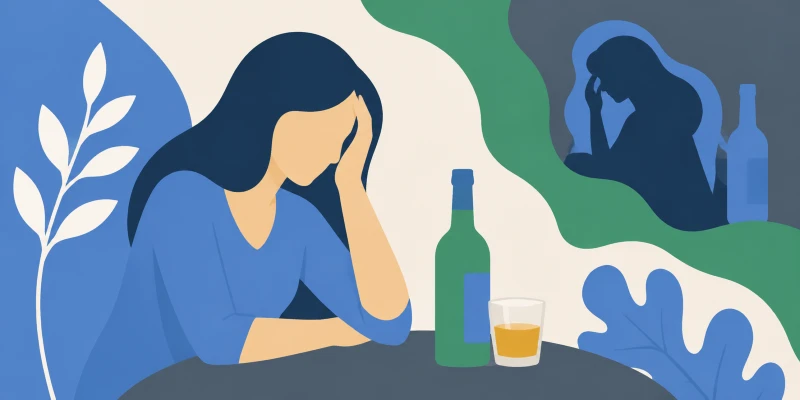
Alcohol is the most widely used psychoactive substance in the world. The numbers show both how common drinking is and how serious the risks can be.
- 62% of Americans aged 12 and older drank alcohol in the past year. That's about 179 million people (NIAAA, 2024).
- 17% of U.S. adults binge drink (4+ drinks for women, 5+ for men in one occasion). Nearly all heavy drinkers also binge drink (CDC).
- Nearly 30 million Americans had alcohol use disorder (AUD) in the past year, yet fewer than 1 in 10 received any treatment (NIAAA).
- In Canada, more people are choosing not to drink. The proportion of Canadians aged 12 and older who hadn't had a drink in the past year rose from 23% in 2015 to 29% in 2024 (Statistics Canada, 2026). Among those who do drink, the average consumption is over 13 standard drinks per week — well above amounts associated with low risk (CCSA, 2025).
- 2.6 million people die from alcohol-related causes each year worldwide, accounting for 4.7% of all deaths (WHO, 2024).
- Men are disproportionately affected. 2 million of the alcohol-attributable deaths worldwide were among men, making alcohol the leading risk factor for death among men aged 15-49 (WHO).
- College-age adults (18-25) have the highest rates of binge drinking and AUD of any age group (NIAAA).
- Alcohol is a Group 1 carcinogen — the same classification as tobacco and asbestos. It's linked to at least seven types of cancer, including breast, liver, and colorectal (CDC).
Alcohol is deeply embedded in social life and culture, but it's also a substance with real risks. Understanding the scope helps put your own drinking in perspective.
This is the most common question people ask about their drinking. The answer isn't just about how many drinks you have. It's about how alcohol fits into your life and whether it's causing harm.
What "moderate" drinking means: According to the NIAAA, moderate drinking is up to 1 drink per day for women and up to 2 drinks per day for men. Binge drinking is 4+ drinks for women or 5+ for men in about 2 hours. Heavy drinking is 8+ drinks per week for women or 15+ for men. Canada's Guidance on Alcohol and Health takes a different approach — it recommends no more than 2 standard drinks per week for both men and women to minimize health risks, with any amount above that carrying progressively higher risk.
But guidelines only tell part of the story. The real question is how alcohol affects you personally.
Here are some signs that your drinking might be too much:
- You regularly drink more than you intended
- You've tried to cut back and found it difficult
- You drink to cope with stress, anxiety, or bad days
- You've noticed your tolerance going up — needing more to feel the same effect
- You feel guilty or ashamed about your drinking afterwards
- Friends or family have expressed concern about your drinking
- Drinking has gotten in the way of work, school, or relationships
- You've had memory blackouts or done things you regret while drinking
If several of these ring true, your drinking may be in a risk zone. Our Alcohol Check can give you a clearer picture.
Alcohol use disorder (AUD) is a medical condition diagnosed by a set of criteria. You don't need to hit rock bottom for your drinking to be a problem. The signs exist on a spectrum from mild to severe.
The 11 diagnostic criteria for AUD include:
- Drinking more or for longer than you intended
- Wanting to cut down or stop but being unable to
- Spending a lot of time drinking, being hungover, or recovering from drinking
- Cravings: strong urges or desires to drink
- Drinking interfering with work, school, or home responsibilities
- Continuing to drink despite it causing problems with family or friends
- Giving up or reducing activities you used to enjoy in order to drink
- Drinking in physically dangerous situations (driving, swimming, operating machinery)
- Continuing to drink despite knowing it's harming your health or mental state
- Tolerance: needing more alcohol to get the same effect
- Withdrawal symptoms when the effects wear off (anxiety, shakiness, sweating, nausea, insomnia)
Mild AUD: 2-3 symptoms. Moderate: 4-5 symptoms. Severe: 6+ symptoms. The more you recognize, the more important it is to take action. The NIAAA offers resources for understanding and treating AUD.
Understanding the difference matters because they carry very different health risks.
Moderate drinking (per NIAAA guidelines):
- Women: up to 1 drink per day, no more than 7 per week
- Men: up to 2 drinks per day, no more than 14 per week
- One standard drink = 12 oz beer, 5 oz wine, or 1.5 oz spirits
Binge drinking is about the pattern, not the average. It means consuming enough in about 2 hours to reach a blood alcohol level of 0.08%: 4+ drinks for women, 5+ for men. Even if you only binge once a week, you're putting yourself at risk for injuries, blackouts, and long-term health problems.
Heavy drinking means 8+ drinks per week for women or 15+ for men. Most heavy drinkers also binge drink, and this pattern carries the highest risk of developing AUD.
Many people are surprised to learn that their "normal" Friday night out qualifies as binge drinking. If that's you, you're not alone, but it's worth being aware of.
Alcohol affects nearly every organ in your body. The effects depend on how much and how often you drink, but the risks are real at every level of consumption.
Liver. Your liver processes alcohol, but it can only handle so much at once. Over time, heavy drinking can cause fatty liver, alcoholic hepatitis, and cirrhosis. These develop silently — you may not notice symptoms until significant damage is done.
Heart and blood vessels. Heavy drinking raises blood pressure, weakens heart muscle, and increases the risk of stroke and irregular heartbeat. Even moderate drinking has been linked to increased cancer risk.
Brain. Alcohol is a depressant that slows brain activity. Chronic drinking can shrink brain tissue, affect memory and decision-making, and increase the risk of dementia. The brain can recover with abstinence, but some changes may be lasting.
Cancer risk. The CDC classifies alcohol as a Group 1 carcinogen. It's linked to cancers of the mouth, throat, esophagus, liver, colon, and breast. The risk increases with the amount you drink, but even light drinking carries some risk.
Immune system. Heavy drinking weakens your immune system, making you more vulnerable to infections like pneumonia and tuberculosis.
What to watch for:
- Unexplained fatigue, digestive issues, or weight gain around the midsection
- High blood pressure or irregular heartbeat
- Memory lapses or trouble concentrating
- Waking up feeling shaky, sweaty, or nauseous (early withdrawal signs)
Many of these effects are reversible if you cut back or stop drinking. The body is remarkably good at healing once the alcohol is removed.
Alcohol has a powerful effect on the brain, which is why it's so widely used — and why it can be so hard to quit.
Dopamine and the reward system. When you drink, alcohol triggers the release of dopamine in the brain's reward center. This creates feelings of pleasure and relaxation. But over time, your brain adapts by producing less dopamine naturally, so you need more alcohol to feel the same effect. This is the foundation of tolerance and dependence (DrugRehab.com).
Long-lasting changes. New research from Vanderbilt University shows that alcohol can cause changes in the brain's dopamine system that persist for at least a month after drinking stops. This may help explain why relapse risk remains high even after a period of abstinence.
Prefrontal cortex. Alcohol impairs the part of your brain responsible for impulse control, decision-making, and long-term planning. That's why people do things while drunk that they would never do sober.
Blackouts and memory. Drinking too much too fast can cause temporary memory blackouts. These happen when your brain is temporarily unable to form new memories — not from "passing out" but from the alcohol disrupting the hippocampus.
The good news is that the brain has remarkable plasticity. With sustained abstinence, dopamine function can gradually return to normal, and cognitive abilities improve.
The relationship between alcohol and mental health is a two-way street. Many people drink to cope with anxiety, depression, or stress — but alcohol actually makes these conditions worse over time.
Anxiety. Alcohol is a depressant, and while it can feel relaxing in the moment, it actually disrupts the brain's natural anxiety regulation systems. When the alcohol wears off, anxiety often comes back stronger than before. This is called "rebound anxiety" and it's one of the main reasons people keep drinking.
Depression. Heavy drinking is strongly linked to depression. Alcohol depletes serotonin and dopamine over time, making it harder to experience pleasure from normal activities. What starts as "drinking to feel better" can end up making you feel worse even when you're not drinking.
Sleep disruption. While alcohol can help you fall asleep faster, it seriously disrupts sleep quality. It reduces REM sleep, causes frequent waking, and worsens sleep apnea. Poor sleep then affects mood, focus, and emotional resilience the next day.
The trap: The short-term relief alcohol provides makes it tempting to keep using it as a coping tool. But the long-term effect is that it weakens your ability to cope naturally. Many people find that when they cut back on drinking, their anxiety and mood improve significantly.
Most people who drink are social drinkers — they have a glass of wine with dinner, a beer at a barbecue, or a cocktail at a party. But the line between social drinking and problem drinking can be blurry. Here's how to tell them apart.
Social drinking looks like:
- You drink in social settings but don't need alcohol to have fun
- You can easily have one or two and stop
- You don't think about drinking when you're not doing it
- You can go days or weeks without drinking, no problem
- Drinking doesn't cause problems in your life
Problem drinking looks like:
- You regularly drink more than you planned
- You often drink alone or in secret
- You need a drink to relax, unwind, or deal with stress
- You feel guilty, anxious, or ashamed about your drinking
- You've tried to cut back and couldn't
The key difference is control and consequences. If you can reliably moderate your drinking and it's not causing harm, you're in social drinking territory. If you can't control it or it's causing problems despite wanting to stop, it's moved into problem territory.
If cutting back were easy, everyone would do it. The difficulty isn't about weak willpower — it's about how alcohol fundamentally changes your brain.
Your brain adapts. Chronic drinking alters your brain chemistry. The same drink that used to give you a pleasant buzz now just makes you feel "normal." Your baseline changes, so your brain interprets sobriety as withdrawal and pushes you to drink just to feel okay.
Habit loops. Drinking is tied to routines: a beer after work, wine with dinner, shots at the bar. These cues trigger automatic urges that feel almost impossible to resist, especially when you're tired or stressed.
Social pressure. Drinking is deeply embedded in social life. Saying "no" can feel awkward or invite questions. Many people find that the hardest part of cutting back is navigating social situations without a drink in hand.
Withdrawal symptoms. If you drink heavily, cutting back too quickly can cause real withdrawal symptoms — anxiety, shakiness, sweating, nausea, trouble sleeping, and irritability. These symptoms are uncomfortable enough that they drive many people back to drinking for relief.
Understanding these forces doesn't make it easy, but it does explain why you need a strategy, not just a resolution.
Concern for someone else's drinking is one of the most painful situations around alcohol. Watching someone you care about drink too much and not knowing what to do can be deeply frustrating.
Red flags to watch for:
- Drinking more than they used to, or more than they say they will
- Drinking alone, in secret, or at unusual times (morning, work hours)
- Changes in mood: more irritable, defensive, anxious, or withdrawn
- Memory blackouts, hangovers affecting daily life, or drinking in risky situations
- Neglecting responsibilities: work, family, hygiene, or financial obligations
- Getting defensive or angry when you bring up their drinking
- Making promises to cut back that they don't keep
How to help:
- Approach with care, not confrontation. Use "I" statements ("I'm worried about you" not "You drink too much")
- Choose a calm moment when they haven't been drinking
- Encourage them to talk to a doctor or try our Alcohol Check
- Resources like AA and NIAAA offer help for both the drinker and their loved ones
Whether you want to cut back or quit entirely, having a plan makes a huge difference. Here are the strategies that work best.
Set clear limits. Decide how many days per week you'll drink and how many drinks per occasion. Write it down. A vague intention is much weaker than a concrete rule.
Track your drinking. Use a notebook or an app to log every drink. Most people underestimate how much they drink by 30-50%. Seeing the numbers in black and white can be eye-opening.
Find alternatives. If you drink to unwind, find another way to decompress: a walk, a bath, meditation, or a non-alcoholic drink you genuinely enjoy. If you drink socially, try alternating alcoholic drinks with sparkling water or NA options.
Try the 90-Second Urge Reset. Cravings to drink usually peak and fade within a few minutes. Our 90-Second Urge Reset is a simple guided breathing exercise to help you ride out the urge without acting on it.
Change your habits. If you always have a beer when you get home, change your route or your routine. Break the automatic link between the trigger and the drink.
Tell someone. Letting even one person know you're cutting back creates accountability and support. You don't have to do it alone.
Get professional help if needed. If you've tried to cut back and couldn't, or if you experience withdrawal symptoms, talk to a doctor. Medical support for quitting alcohol can be lifesaving.
There are more options than most people realize, and many are free, confidential, and effective.
Support groups:
- Alcoholics Anonymous (AA): free 12-step peer support meetings worldwide, in person and online
- SMART Recovery: science-based mutual support groups for all addictions, including alcohol
- Online communities and forums for people cutting back or quitting drinking
Specialist support:
- NIAAA: research-based information, a free Alcohol Treatment Navigator tool, and guidance for finding quality care
- Primary care doctors can screen for AUD and prescribe medications that reduce cravings (naltrexone, acamprosate, disulfiram)
- Therapists and counselors specializing in substance use — CBT, motivational interviewing, and other approaches are effective
Medical options:
- Medication-assisted treatment can reduce cravings and prevent relapse
- Medical detox programs for safe withdrawal management (alcohol withdrawal can be dangerous without medical supervision)
- Inpatient and outpatient rehab programs for moderate to severe AUD
Millions of people have successfully changed their relationship with alcohol. You can too, and you don't have to hit rock bottom to start.
Alcohol withdrawal is what happens when a person who has been drinking heavily suddenly stops or cuts back significantly. It can range from mildly uncomfortable to life-threatening.
Mild to moderate symptoms: Anxiety, shakiness, sweating, nausea, headache, insomnia, and cravings. These usually start within 6-12 hours of the last drink and peak around 24-48 hours.
Severe withdrawal (delirium tremens or DTs): Hallucinations, confusion, rapid heart rate, high fever, and seizures. DTs affect about 3-5% of people withdrawing from alcohol and can be fatal without medical treatment.
If you drink heavily every day, do not stop suddenly without talking to a doctor. Withdrawal can be dangerous and even life-threatening. Medical detox programs can help you withdraw safely with medications to manage symptoms.
For people who drink at lower levels, cutting back gradually (tapering) is usually safe, but if you experience any concerning symptoms, seek medical help immediately.
This is one of the most debated questions in addiction recovery. The answer differs for different people.
For mild AUD: Some people with mild alcohol problems can successfully return to moderate drinking after a period of abstinence, especially if they combine it with behavioral strategies or professional support.
For moderate to severe AUD: The evidence strongly suggests that for people who have developed significant alcohol dependence, attempting to return to moderate drinking is risky. Most relapse patterns show that people who try to "just have one" end up back where they started or worse.
Why moderation is hard after dependence: Once your brain has been rewired by chronic alcohol exposure, the response to even small amounts of alcohol can trigger the same craving and loss-of-control patterns. It's not a test of willpower — it's a neurological reality.
Many people find that the effort of trying to moderate (constantly counting, negotiating with yourself, managing cravings) is more exhausting than total abstinence. The freedom of simply not drinking at all can be a relief. Only you and your healthcare provider can decide what path is right for you.