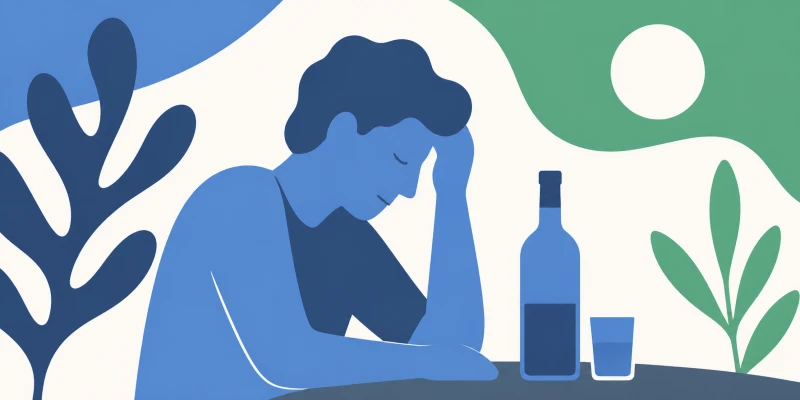
What Is Alcohol Addiction?
Alcohol addiction, clinically known as alcohol use disorder (AUD), is a pattern of drinking that becomes compulsive and continues despite harmful consequences to health, relationships, work, or finances.
Unlike casual drinking, where someone can stop after one or two without much thought, alcohol addiction involves a loss of control. Drinking more than intended, for longer than intended. Struggling to cut back even when you genuinely want to.
Alcohol addiction doesn't always look like you think it does.
It's not just the person who drinks every morning.
It's also the weekend binge drinker who blacks out regularly. The successful professional who needs wine to unwind every night. The social drinker whose "fun night out" keeps escalating past the point they planned.
The DSM-5, the diagnostic manual used by mental health professionals worldwide, defines alcohol use disorder on a spectrum from mild to severe.
You don't need to hit rock bottom to have a problem. The earlier it's recognized, the easier it is to address.
Frequently Asked Questions
Health guidelines define moderate drinking as up to one drink per day for women and up to two for men. Going beyond that regularly is considered heavy or at-risk drinking.
But the numbers don't tell the full story. The real question is about your relationship with alcohol. Do you find it difficult to stop once you start? Do you plan your days around drinking? Has anyone expressed concern?
Some people drink within "safe" limits but still have a problematic relationship with alcohol. Others exceed guidelines occasionally without addiction. The amount matters, but the pattern matters more.
Alcohol addiction shows up in patterns, not just in drinking frequency. Here are the most common signs.
Loss of control. Drinking more than you intended, or for longer than you planned. Telling yourself "just one" and having four.
Failed attempts to cut back. You've tried to drink less, take breaks, or quit entirely, but couldn't sustain it.
Time spent on alcohol. A significant portion of your week revolves around drinking, recovering from drinking, or thinking about drinking.
Cravings. Strong urges or preoccupation with drinking, especially in familiar situations or emotional states.
Continuing despite consequences. Drinking even when it's hurting your health, relationships, work performance, or financial stability.
Neglected activities. Giving up hobbies, social events, or responsibilities because drinking takes priority.
Tolerance. Needing more alcohol to get the same effect you used to get with less.
Withdrawal. Feeling anxious, shaky, nauseous, or irritable when you don't drink or drink less than usual.
If several of these sound familiar, the alcohol self-checks above are a good starting point for reflection.
Yes. Alcohol addiction is about loss of control, not about daily drinking.
Many people with alcohol use disorder don't drink every day. The weekend binge drinker who can't stop once they start. The person who stays sober Monday through Thursday but blacks out every Friday. The "celebratory" drinker who finds increasingly creative reasons to celebrate.
Binge drinking, typically defined as four or more drinks for women and five or more for men within about two hours, is actually the most common form of problematic drinking. It causes more alcohol-related harm than daily heavy drinking simply because far more people do it.
If you can go days without alcohol but lose control whenever you do drink, that's still a problem worth examining.
Treatment for alcohol addiction exists on a spectrum, from self-guided change to intensive medical care. What works depends on the severity of the addiction and the individual's circumstances.
Cognitive Behavioral Therapy (CBT) helps identify and change the thought patterns and situations that trigger drinking. It's one of the most effective approaches for managing urges and building alternative coping strategies.
Support groups like Alcoholics Anonymous (AA) and SMART Recovery provide peer support, accountability, and structured programs. AA alone has over two million members worldwide, with meetings in nearly every city.
Medication including naltrexone, acamprosate, and disulfiram can reduce cravings, ease withdrawal, or make drinking physically unpleasant. These are prescribed by doctors and are most effective when combined with therapy or support groups.
Detox and inpatient treatment may be necessary for severe physical dependency, as alcohol withdrawal can be dangerous and even life-threatening without medical supervision.
The most important thing to know: alcohol addiction is treatable. Millions of people recover every year. The earlier you address it, the easier the path.
Taking the First Step
Recognizing that your drinking might be problematic is itself a significant step. Many people spend years rationalizing, minimizing, or comparing themselves to others who "drink more" without ever looking honestly at their own patterns.
The alcohol checks above provide a structured starting point for reflection. They're not diagnostic tools. No online check replaces a professional evaluation. But they can help you organize your thoughts, identify patterns, and decide whether it's worth exploring further.
Recovery from alcohol addiction is possible. Millions of people have done it, and the tools available today are more effective and accessible than ever. The brain's neuroplasticity means new, healthier patterns can be built over time. Each small choice to respond differently to a trigger strengthens those new pathways.
It's not about being perfect. It's about progress.
See a problem on this page? Tell us